
Texture in Interior Design: How Tactile Elements Shape the Experience of a Residence
The spaces we inhabit influence not only how we live but also how we engage with our surroundings. Among the many tools available to designers, texture plays a subtle yet powerful role in shaping the character of a residence. Unlike colour or scale, which are immediately seen, texture is experienced over time, adding depth, warmth, and meaning to interiors.
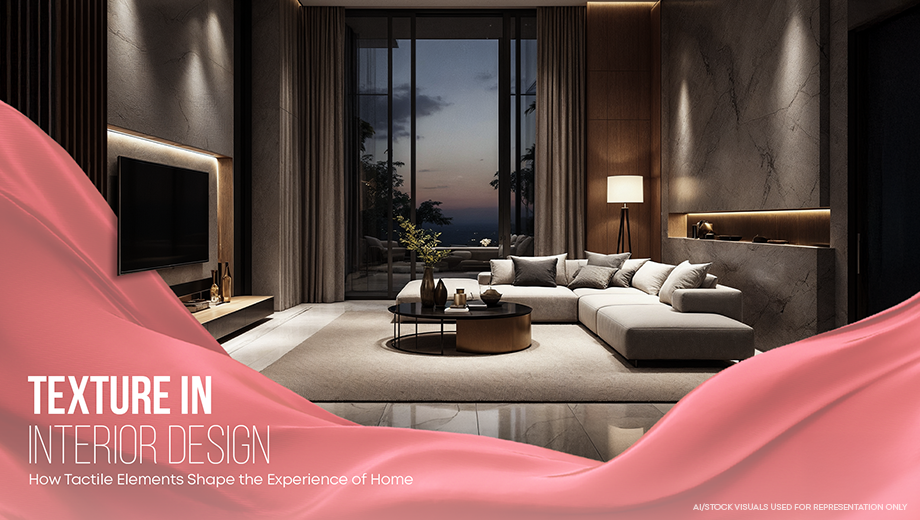
While visuals create the first impression, tactile design defines the lasting experience. Smooth surfaces such as polished marble, brushed metal, or glass suggest clarity and openness, reinforcing modernity. In contrast, natural wood grains, raw stone, or fabric panelling introduce warmth and grounding, ensuring that expansive layouts still feel inviting and relatable.
Materials carry their own language. Wood softens scale and introduces natural rhythm. Stone conveys permanence and gravitas. Fabrics and fibres add comfort and intimacy, while glass and metal offer reflection, lightness, and spatial connection. Thoughtfully combining these materials transforms a residence from a purely visual statement into an engaging, layered environment.
Interior wall texture design is one way this interplay becomes visible. A foyer with textured cladding, a living space that contrasts matte and glossy finishes, or a bedroom enriched with layered fabrics demonstrates how modern interior wall textures anchor spaces with both identity and usability. These choices are not embellishments — they are markers of foresight and craftsmanship.
Textures also shape how people perceive and respond to a space. A thoughtful mix of finishes can make a room feel more personal, authentic, or calming depending on the materials used. For residents, these qualities create environments that align with daily rhythms while remaining relevant over time.
At its best, texture in interior design is more than decoration. It is a design strategy that shapes how spaces are lived in and remembered. By weaving tactile experiences into architecture, developers and designers create residences that are felt as much as they are seen — environments where materiality supports comfort, character, and enduring value.