
Landscape Design in Residential Communities: More Than Just Green Views
In residential communities today, landscape design is no longer treated as a visual backdrop. It plays an active role in shaping how residents move, pause, and interact with their surroundings on a daily basis. Well-planned outdoor spaces support routine, reflection, and connection — extending the home beyond its walls.
Modern landscape design in residential communities often includes thematic gardens that introduce variety and purpose. Herb gardens, for instance, invite sensory engagement through fragrance and texture, while flowering zones bring seasonal rhythm into everyday life. These spaces are designed not just to be seen, but to be experienced — encouraging residents to slow down and engage with nature in small, meaningful ways.
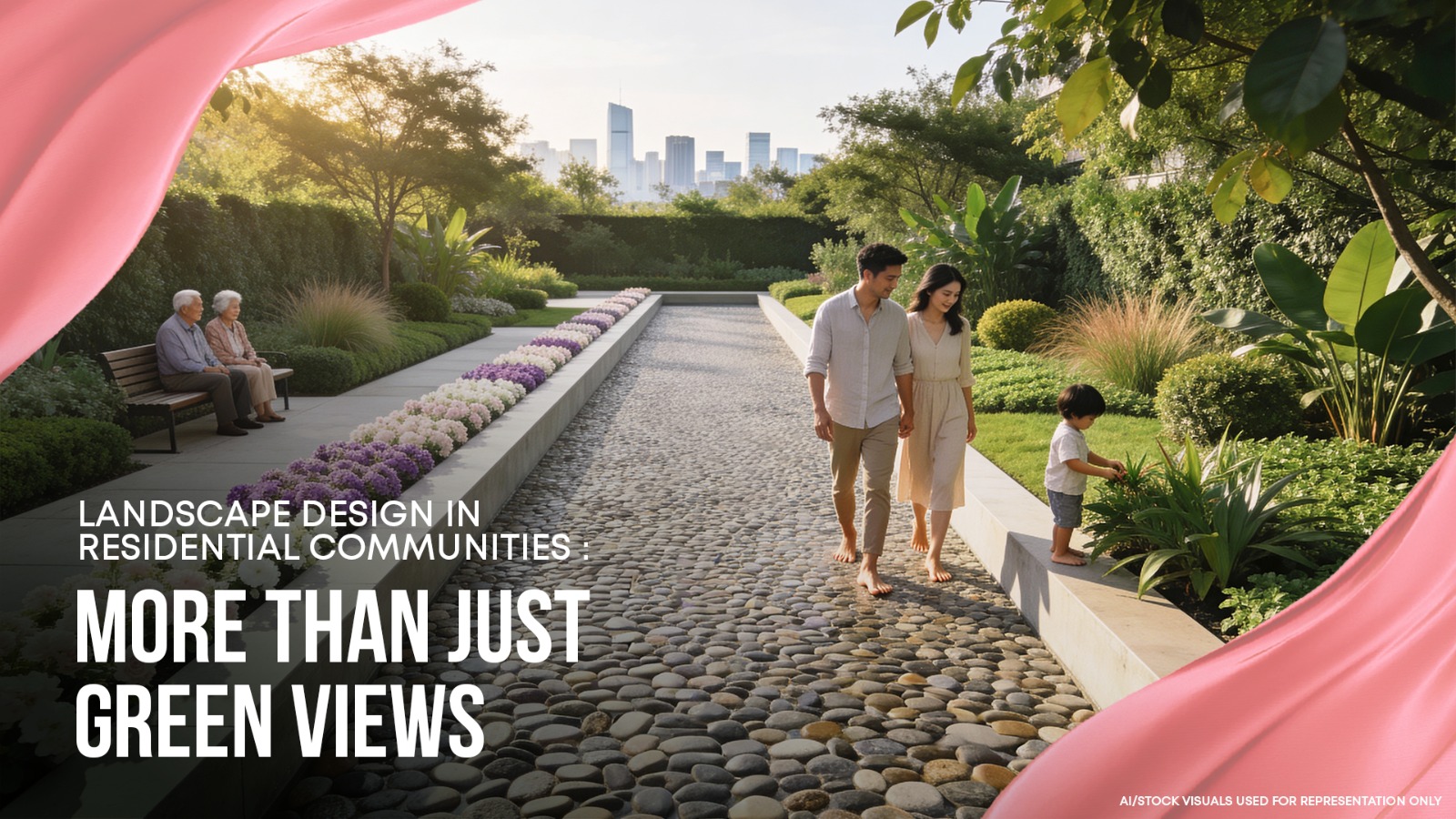
Pathways are another critical element. Reflexology or acupressure walkways, when thoughtfully integrated, promote mindful movement and add intention to routine walks. Shaded trails, seating pockets, and open lawns support different patterns of use — from solitary morning strolls to shared evening conversations.
The true value of community landscape planning lies in how it supports daily rituals. A morning walk through greenery, a pause under a tree, or an evening spent outdoors becomes part of a lived rhythm. These moments contribute to a sense of balance and continuity, especially in dense urban environments.
When residential landscape design moves beyond ornamentation, it becomes a framework for well-being and community life. By focusing on movement, sensory engagement, and everyday usability, outdoor spaces evolve into shared environments that quietly enrich how people live, connect, and unwind.