
Switchboards, Sensors & Sensory Living: How Homes Adapt Across Generations
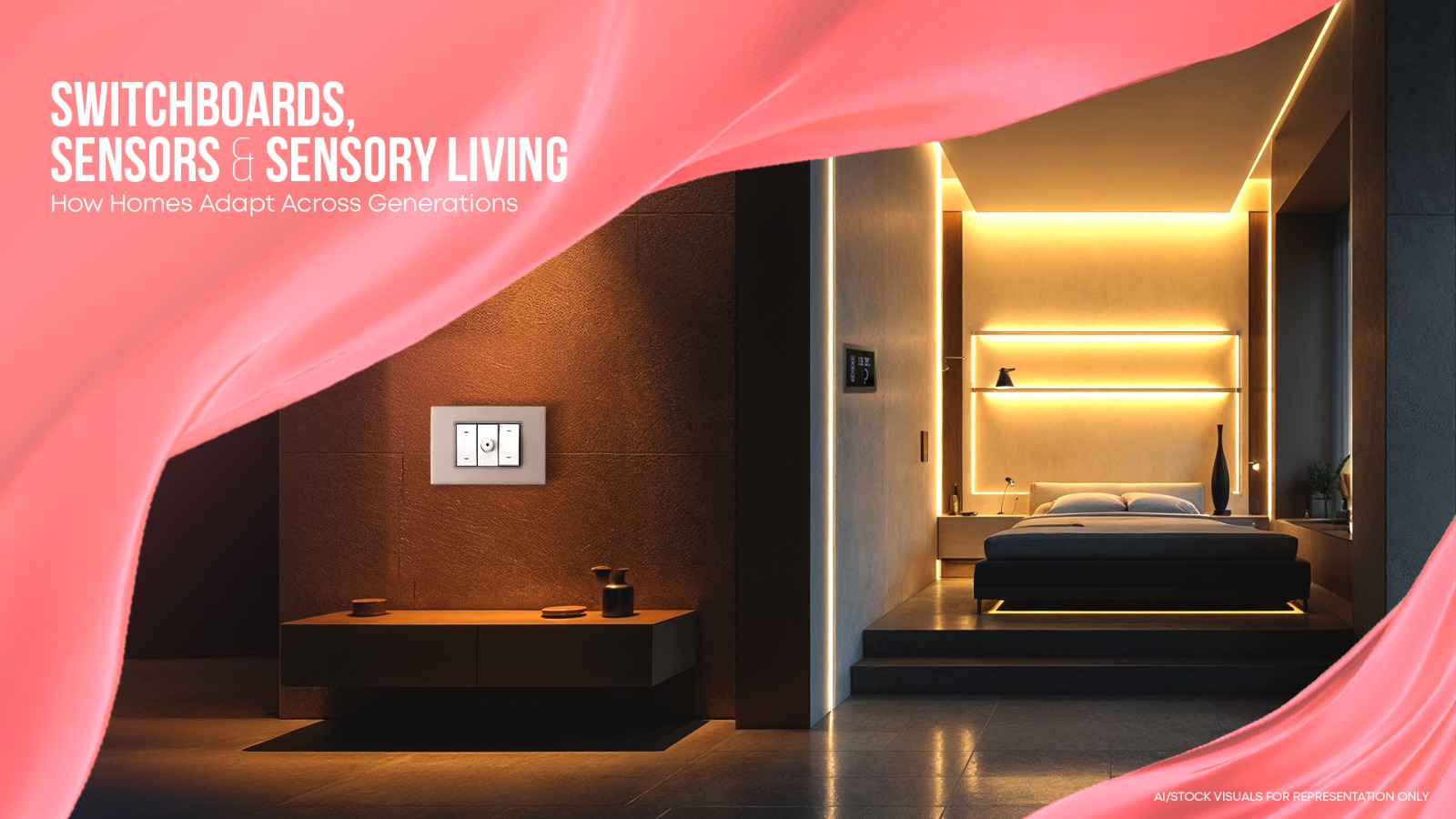
Walk into two different homes, and you can often tell their era by a single detail – the switchboard. For some, it’s a familiar row of tactile buttons. For others, it’s a motion sensor that quietly responds before a hand even reaches the wall. The evolution of home intelligence is not just technological; it reflects changing habits, comfort levels, and generational preferences.
Traditional switchboards continue to hold relevance, especially for senior residents. Physical controls offer clarity and reassurance. The action is immediate and visible – a press, a click, a response. There is no interface to interpret, no learning curve to navigate. In multigenerational homes, that simplicity still matters.
Sensor-based systems, however, introduce a different kind of comfort. Motion-activated lighting along corridors, climate systems that adjust automatically, and touchless fixtures reduce effort and enhance ease. These features support fluid movement through the home, particularly for younger families accustomed to connected living.
The most effective home automation design does not eliminate tactile controls; it integrates them. Smart lighting can coexist with accessible wall switches. Automated systems can be paired with manual overrides. This layered approach ensures that technology remains supportive rather than prescriptive.
Human-centric homes recognise that comfort looks different at every stage of life. Seniors may prioritise familiarity. Younger residents may value remote access and digital convenience. A well-considered home accommodates both without friction.
In the end, sensory living is less about gadgets and more about responsiveness – how quietly and intuitively a home supports everyday routines across generations.