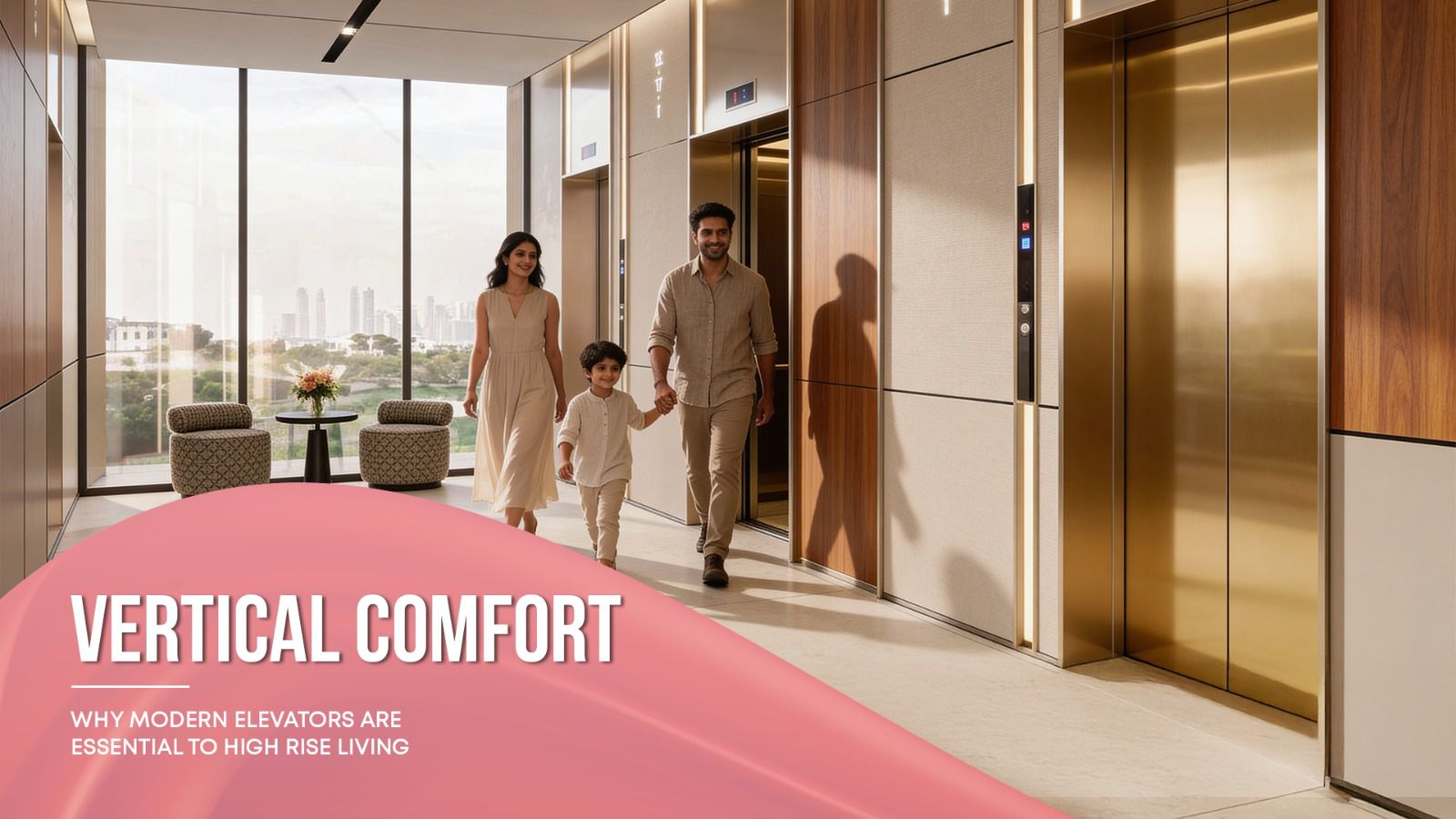

Vertical Comfort: Why Modern Elevators Are Essential to High-Rise Living
In high-rise residential living, the elevator is one of the most frequently used yet least discussed aspects of daily life. While architecture often focuses on views, layouts, and amenities, vertical mobility quietly shapes how residents move through their homes every day.
As residential towers grow taller, elevator systems have evolved significantly to support both convenience and efficiency. High-speed elevators, for instance, reduce waiting and travel time between floors, allowing residents to move quickly and comfortably within large residential blocks. In developments with multiple towers and high floor counts, this efficiency becomes essential for maintaining smooth daily circulation.
Technology has also improved how elevators operate behind the scenes. Modern systems use advanced control mechanisms such as variable voltage and variable frequency (V3F) drives, which regulate motor speed more precisely. This not only ensures smoother acceleration and deceleration but also improves energy efficiency by optimizing power usage during operation.
Safety remains a fundamental priority in contemporary elevator design. Features like automatic rescue devices allow elevators to safely move to the nearest floor during a power interruption, ensuring passengers can exit without inconvenience. These systems add a layer of reliability that residents rarely notice but depend on when needed.
Equally important is the design of the elevator environment itself. Higher ceiling heights, improved ventilation, and thoughtfully planned lift lobbies enhance comfort, especially during peak hours when multiple residents use the system simultaneously.
Together, these advancements reflect a broader shift in residential planning. Elevators are no longer treated as simple functional utilities. Instead, they are integral components of high-rise infrastructure – engineered to support safety, efficiency, and the everyday rhythm of vertical living.